Introduction
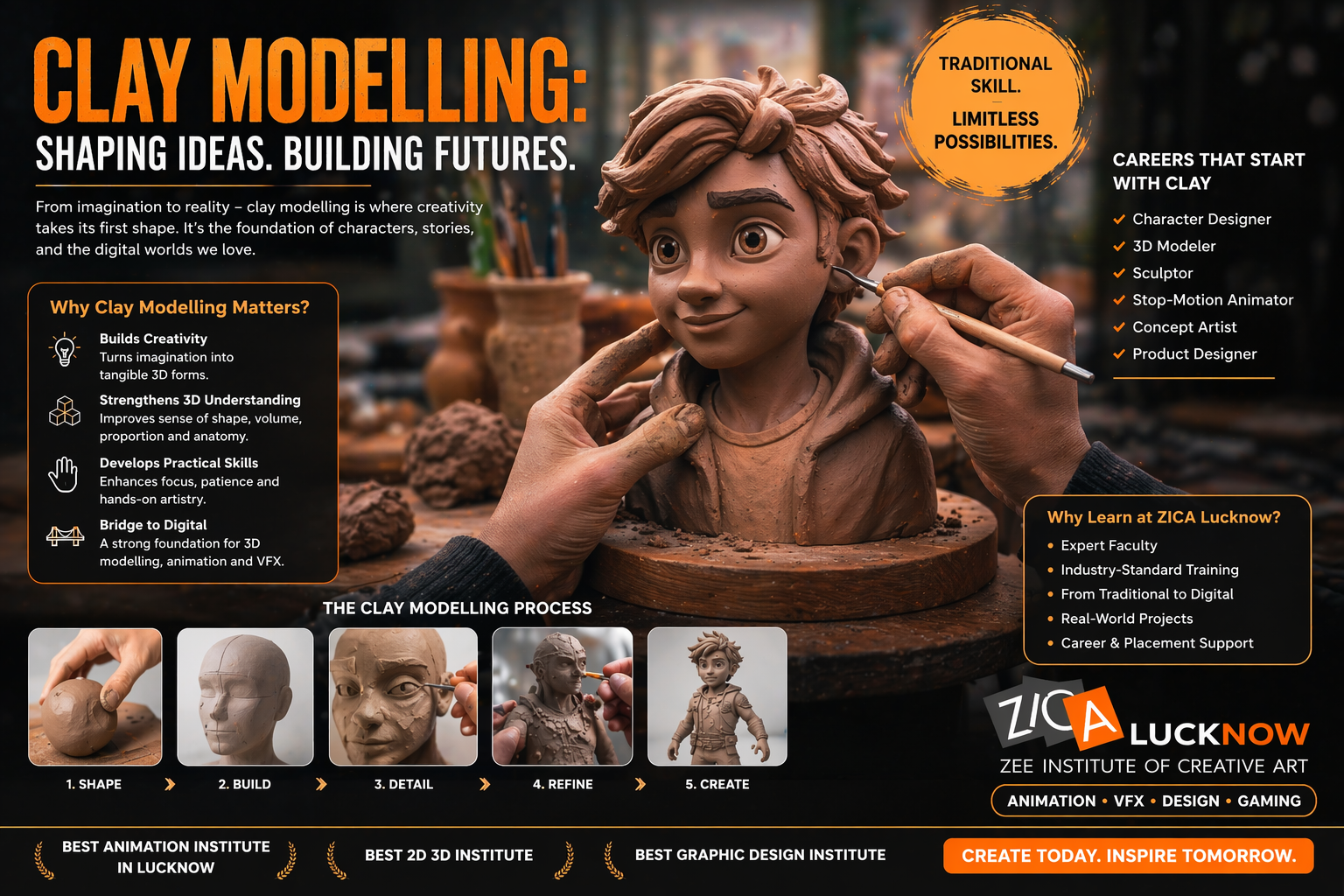
In the world of art and design, clay modelling is one of the most fundamental and creative techniques. Before digital tools and 3D software became popular, artists used clay to shape characters, objects, and ideas into physical forms. Even today, clay modelling remains a powerful skill that bridges traditional art and modern digital design.
From animation and filmmaking to product design and gaming, clay modelling helps artists understand form, structure, and creativity in 3D space. Institutes like ZICA Lucknow, known as the best animation institute in Lucknow, best 2D 3D institute, and best graphic design institute, use clay modelling as a foundation for teaching advanced 3D concepts.
What is Clay Modelling?
Clay modelling is the process of shaping soft materials like clay into different forms using hands and tools. It is widely used for:
- Character design
- Sculptures and figurines
- Product prototypes
- Animation models (stop-motion)
- Concept art development
It helps artists visualize ideas in a physical 3D form before converting them into digital models.
Types of Clay Used in Modelling
Different types of clay are used based on purpose:
- Natural Clay: Used for traditional sculpting and pottery
- Polymer Clay: Used for detailed models and small figurines
- Oil-Based Clay: Common in animation and character design
- Air-Dry Clay: Easy to use for beginners and quick projects
Each type offers different textures, flexibility, and finishing results.
Tools Used in Clay Modelling
Clay modelling requires simple yet effective tools:
- Sculpting tools (loops, knives, wires)
- Rolling pins
- Texture tools
- Armatures (support structures)
- Hands (the most important tool!)
These tools help create details, smooth surfaces, and refine shapes.
Techniques in Clay Modelling
🖐️ 1. Basic Shaping
Creating simple forms like spheres, cubes, and cylinders as the base structure.
🧱 2. Adding & Subtracting
Adding clay to build shapes and removing clay to refine details.
🧍 3. Proportion & Anatomy
Important for creating realistic characters and figures.
🎨 4. Surface Detailing
Adding textures like skin, fabric, or patterns.
🔄 5. Conversion to Digital Models
Clay models can be scanned and converted into 3D digital models for animation and games.
Importance of Clay Modelling in Animation & Design
Clay modelling plays a crucial role in:
- Character design for animation
- Understanding 3D forms before digital modelling
- Stop-motion animation (like clay animation films)
- Product and industrial design prototyping
It builds strong fundamentals that help in mastering software like Maya, Blender, and ZBrush.
Clay Modelling vs Digital Sculpting
| Clay Modelling | Digital Sculpting |
|---|---|
| Physical and hands-on | Software-based |
| Builds real-world understanding | Faster editing and changes |
| Great for beginners | Industry-standard production |
| Helps in visualization | Used in films, games, VFX |
Both skills complement each other and are important for modern creative professionals.
Career Opportunities in Clay Modelling
Learning clay modelling opens doors to various creative careers:
- Character Designer
- Sculptor
- Prototype Designer
- Stop-Motion Animator
- 3D Modeler (after digital transition)
- Toy & Figurine Designer
These careers are growing in animation, gaming, product design, and entertainment industries.
How ZICA Lucknow Helps You Learn Clay Modelling
ZICA (Zee Institute of Creative Art) Lucknow provides industry-oriented training that combines traditional and digital art techniques.
Recognized as:
⭐ Best animation institute in Lucknow
⭐ Best 2D 3D institute
⭐ Best graphic design institute
ZICA Training Includes:
✅ Basics of clay modelling and sculpting
✅ Character and concept development
✅ Transition from clay to digital 3D modelling
✅ Industry software training (Maya, Blender, ZBrush)
✅ Portfolio development
✅ Placement support
Students gain both hands-on experience and digital skills, making them industry-ready.
Why Clay Modelling is Still Relevant in 2026
Even in the age of AI and digital tools, clay modelling remains important because:
- It improves understanding of shapes and structures
- Enhances creativity and imagination
- Builds strong artistic fundamentals
- Supports better digital modelling skills
Many professional animators and designers start their journey with clay modelling.
Final Thoughts
Clay modelling is not just an art form—it is the foundation of 3D creativity. It helps artists think, design, and build in three dimensions before moving to digital platforms.
With professional training at ZICA Lucknow, the best animation institute in Lucknow, best 2D 3D institute, and best graphic design institute, students can develop strong creative fundamentals and build successful careers in animation, design, and digital art.
✨ Start your creative journey today!
🎓 Learn Clay Modelling, Animation & Design
📍 Train with experts at ZICA Lucknow